Fertilizing trees the right way can make a big difference in their health, growth, and lifespan. Whether you have young saplings in your backyard or mature shade trees on your property, proper tree fertilization helps them develop strong roots, vibrant leaves, and resistance to pests and diseases.
In this guide, you’ll learn how to fertilize trees correctly, when to do it, what type of fertilizer to use, and common mistakes to avoid.
Why Fertilizing Trees Is Important
Trees require nutrients to become healthy and grow. In the wild forests, the leaves together with organic matter decay, and the soil is replenished with nutrients. But in a city and suburban environment, this natural cycle is usually affected. The lawns are raked, the soil is compacted, and nutrients may be lost with time.
The three primary nutrients trees need are:
Nitrogen (N): Stimulates the growth of the leaves and stems.
Phosphorus (P): Helps in the development of roots.
Potassium (K): Improves the general health and resistance to diseases.
A lack of nutrients can be manifested by the trees yellowing, growing slowly, having small leaves, or dieback of branches.
The knowledge of proper fertilization of trees will help them receive all the nutrients they require without harming them.
When Should You Fertilize Trees?
The timing of proper fertilization of trees is significant.
Best Time to Fertilize Trees
In most parts of the United States, the best times to fertilize trees are:
- At the start of spring (before the new growth starts)
- Late fall (when the leaves have fallen)
Early spring fertilizing provides trees with nutrients that they require in active growth. Dormancy is aided by late fall fertilization which helps the root to grow. In cold areas, do not be tempted to fertilize in late summer or early fall. This can encourage new growth which will not harden off until winter which exposes the tree to more frost damage.
Signs Your Tree Needs Fertilizer
Not all trees need fertilizer every year. Over-fertilizing can cause more harm than good.
Look for these signs before applying fertilizer:
- Pale or yellow leaves
- Smaller-than-normal leaves
- Slow growth
- Early leaf drop
- Thin canopy
- Branches deceased at the top of the crown.
When you are not certain, a soil test is the surest method of establishing nutrient deficiencies. Soil testing services are cheaply provided by local extension offices.
Types of Tree Fertilizers
The type of fertilizer to use must be selected in order to have healthy trees.
Granular Fertilizer
Granular fertilizer is simple to spread and gradually helps in releasing nutrients in the soil. It is suitable for home owners and also effective in existing trees.
Find a balanced fertilizer like 10-10-10 or one with more nitrogen in case growth of leaves is primary problem.
Liquid Fertilizer
Liquid fertilizers are fast-acting since the nutrients are available to the roots immediately. They are mostly applied when the tree requires rapid nutrient treatment.
Slow-Release Fertilizer
Slow-release formulas supply nutrients in a number of months. This will minimize chances of over-fertilization and allow a uniform growth.
Organic Fertilizer
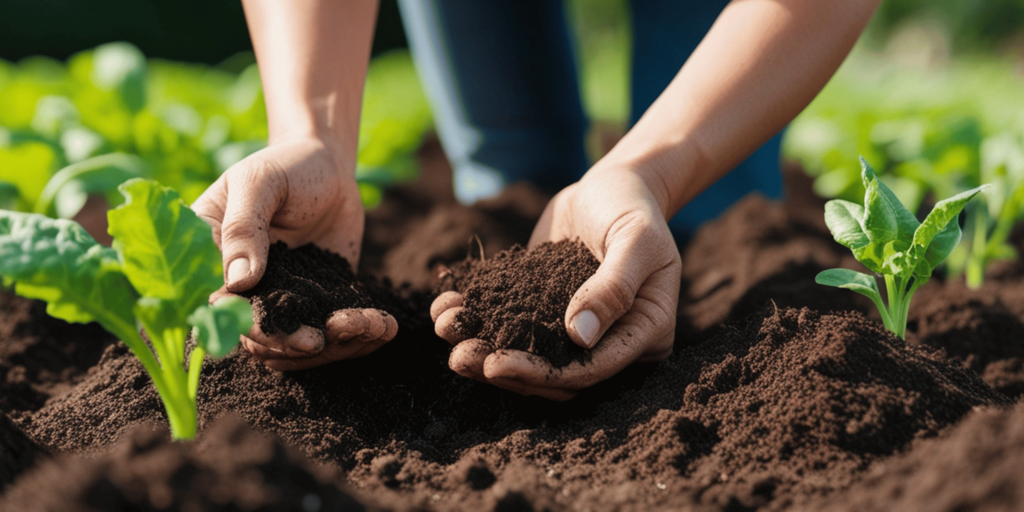
Organic products such as compost, manure or bone meal enhance the soil structure and supplement the soil with nutrients. They are eco-friendly and enhance soil health in the long-term.
How to Fertilize Trees Properly
Having got the general idea, we are going to take a step-by-step process of how to fertilize trees properly.
Step 1: Measure the Tree
In the case of mature trees, the trunk diameter is measured at a height of chest (approximately 4.5 feet above ground). This is used to know the quantity of fertilizer to be used.
An average guideline is 2 -4 lbs of nitrogen per 1000 square feet of root zone.
Step 2: Identify the Root Zone
The roots of trees grow much further than the tree. The roots of feeding are typically found within the first 12 to 18 inches of the soil and may extend to the drip line (the place beneath the outermost branches).
Put fertilizer on this whole root zone, and not only around the trunk.
Step 3: Apply the Fertilizer
Some of the effective methods are:
Broadcast Method: Sprinkle the surface of the soil with granular fertilizer and then water it.
Soil Injection: Deep root zone fertilizer can be injected into the soil.
Drill Hole Technique: This is done by drilling holes 6-12 inches into the ground around the tree and pouring fertilizer in them.
The broadcast method is easy and efficient to most of the homeowners.
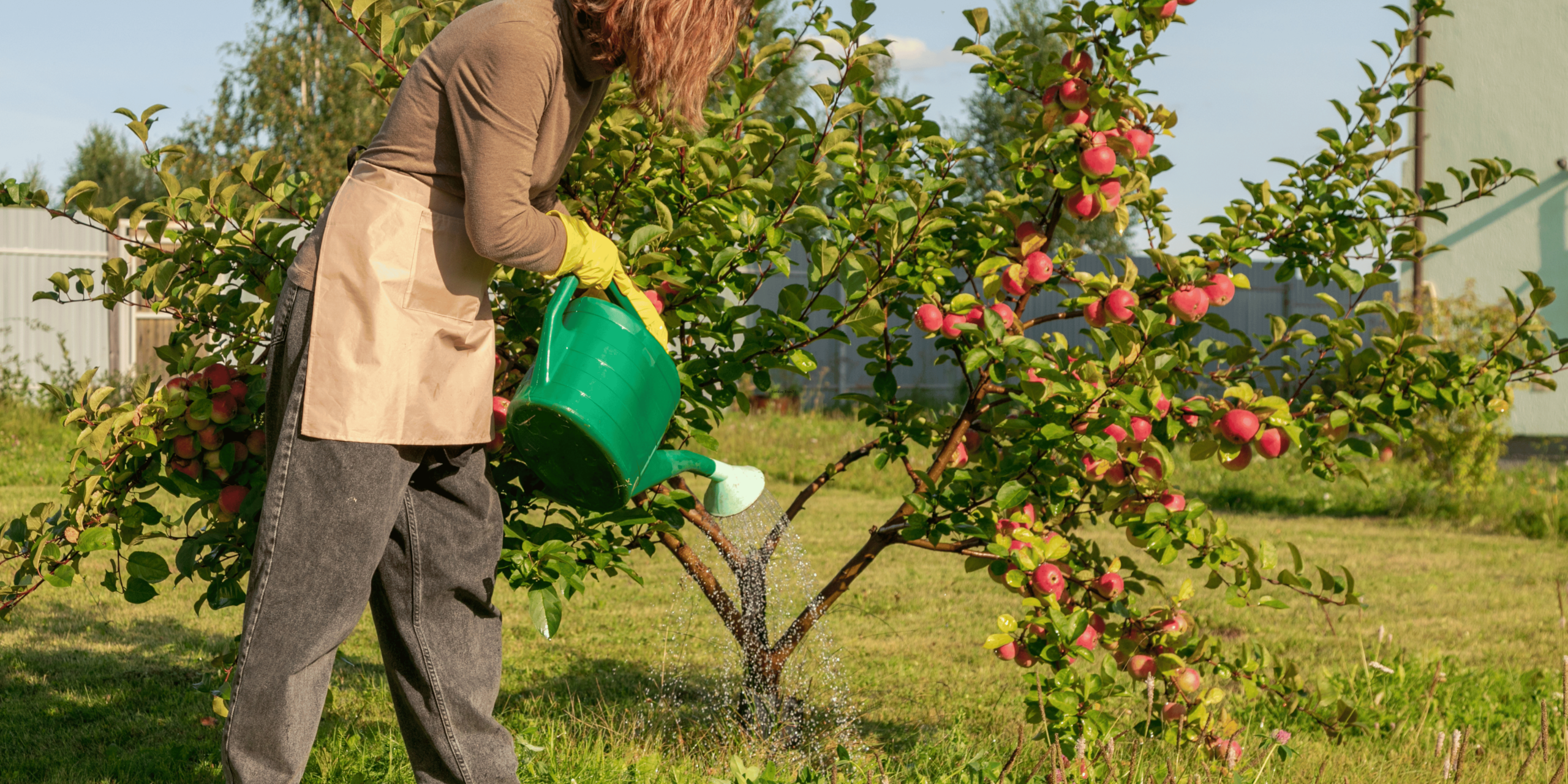
Step 4: Water Thoroughly
Add fertilizer and then irrigate the place. This assists in transferring the nutrients to the root zone and to avoid fertilizer burn.
Fertilizing Young vs. Mature Trees
The young and mature trees have different fertilization requirements.
Young Trees
Fertilization is the most beneficial to young trees since they are yet to develop their root systems. Use a small dose of fertilizer and aim at ensuring a gradual growth as opposed to accelerated growth.
The newly planted trees should not be over-fertilized within the first year. Rather, emphasis should be on adequate watering.
Mature Trees
The trees that were already grown might not require frequent fertilization unless those trees have indicators of deficiency in nutrients. Excessive growth of leaf over roots may be as a result of over-fertilizing of mature trees.
Common Mistakes to Avoid
Fertilizing trees incorrectly can cause damage.
Here are some common mistakes to watch out for:
- Application of the fertilizer too near the trunk
- Using too much nitrogen
- Fertilising the stressed or drought-stricken trees
- Ignoring soil test results
- Incorrect timing of fertilizing.
Always take directions on the labels and adapt to your own circumstances.
Can You Over-Fertilize a Tree?
Yes, it is true that over-fertilizing trees may cause grave problems.
Excess fertilizer may cause:
- Leaf burn
- Weak, rapid growth
- Increased pest issues
- Root damage
- Pollution of environmental runoffs.
Increased use of fertilizer does not imply improved output. The objective is moderately stable growth.
Natural Ways to Improve Tree Nutrition
If you prefer a more natural approach to tree care, consider these methods:
- Spread around the bottom (without touching the trunk) 2-4 inches of organic mulch.
- Burned leaf rakes under the tree.
- Apply compost once in a year to enhance the quality of soil.
- Do not compress the soil in the root zone.
- When the soil is healthy, the trees are healthy.